




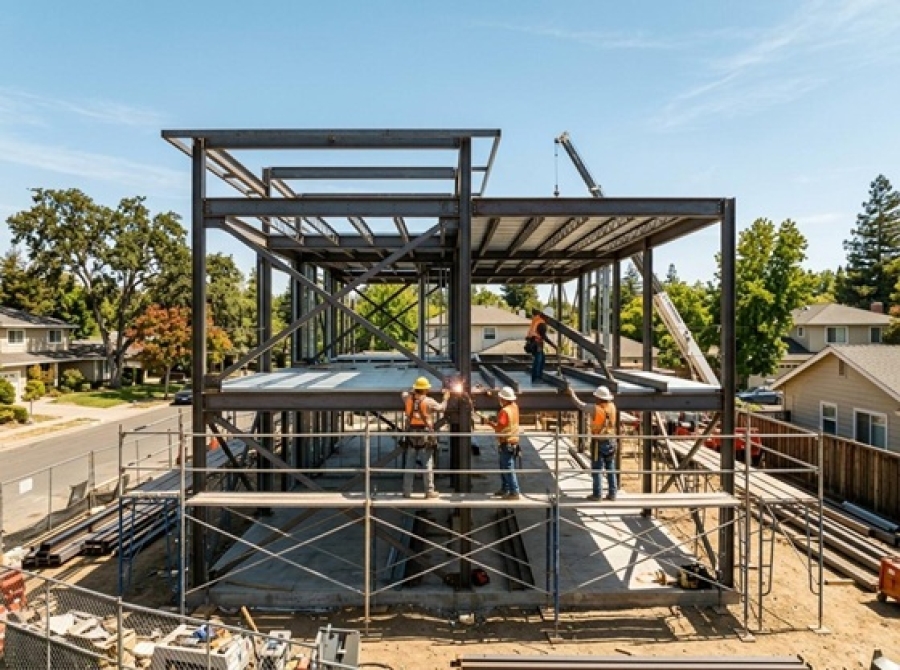
Construction costs now consume a record 64.4% of the average new home price, according to NAHB’s Eye on Housing - the highest share since tracking began in 1998. Steel and metal products continue to see sharp year-over-year price increases. For homebuyers considering new construction, that raises a question worth asking: do you know what you’re paying for when a home is framed in steel?
Most buyers focus on finishes, floor plans, and location. Few think about the grade of steel in the beams above their heads, or whether that steel was properly treated before reaching the job site. Those details determine how a home responds to heavy loads, seismic movement, and decades of weather - and they’re worth understanding before you sign a contract.
Understanding Structural Steel Grades
Not all structural steel is the same. Builders and fabricators work with a range of grades governed by ASTM International standards. The most common in residential and light commercial construction include:
• ASTM A36 - a mild carbon steel used in general structural applications. Strong and weldable, though not the highest strength available.
• ASTM A572 Grade 50 - a high-strength, low-alloy steel with a greater strength-to-weight ratio. Common in beams and columns where loads are significant.
• ASTM A992 - the standard for wide-flange sections in moment frames and high-load structures. Tightly controlled for yield-to-tensile ratio, which matters in seismic zones.
Grade affects ductility, weldability, and performance under dynamic loads like wind and earthquakes. ASTM notes that specifying the correct grade is critical - mismatched specifications are among the most common sources of structural deficiencies identified during post-failure investigations. But grade is only the starting point: once fabricated, structural steel components often require precision heat treatment services to relieve residual stress, adjust hardness, and ensure the material meets the mechanical demands of its load-bearing role.
Ask your builder for the project specifications - a reputable contractor will provide them without hesitation. For a deeper look at how steel profiles influence structural performance, this overview of types of structural steel shapes explains why beam geometry matters as much as the material itself.
How Steel Is Strengthened Before It Reaches Your Home
Selecting the right grade is only part of the quality equation. What happens during fabrication - between the mill and the job site - is equally important and far less visible to buyers.
Steel’s mechanical properties are not fixed. Manufacturers alter them through controlled thermal processes:
1. Normalizing - heating steel above its critical range, then air-cooling. This refines grain structure and relieves residual stress from rolling or forming, producing consistent mechanical properties throughout the section.
2. Quenching and tempering - rapid cooling (quenching) followed by reheating at a lower temperature (tempering). This combination increases hardness and toughness in heavy load-bearing components.
3. Post-weld heat treatment (PWHT) - applied after welding to reduce residual stresses at weld joints. Without it, welded connections can be prone to hydrogen cracking or brittle fracture. The PWHT requirements for structural welding are governed under AWS D1.1.
When a fabricator skips or shortcuts thermal treatment, the consequences are invisible at the time of construction - and often show up years later in cracked welds, brittle connections, or accelerated corrosion. This is especially true in homes built in seismic or high-wind zones, where steel connections face repeated dynamic loading over decades.
Quality Certifications Worth Recognizing
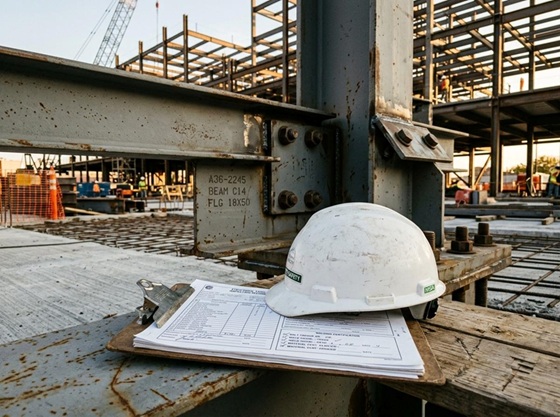
The American Institute of Steel Construction (AISC) runs the most recognized quality certification program in the industry. Over 1,600 U.S. fabricators and erectors currently hold AISC Certification, which requires rigorous Quality Management System audits - covering document control, inspection procedures, and corrective action protocols.
When a fabricator holds AISC Certification, it means an independent auditor has verified their processes - including thermal treatment, welding, and inspection - conform to documented quality standards. Your builder should be able to provide the fabricator’s credentials on request.
Beyond AISC, buyers should know:
• ASTM standards on the spec sheet - confirming which grade is actually specified, not just mentioned verbally.
• AWS D1.1 - the structural welding code governing weld quality and heat treatment requirements.
• Mill test reports (MTRs) - documents issued by the steel mill certifying that a specific batch of steel meets its stated grade properties.
Asking for these documents is standard practice among informed buyers and their agents - not unusual or confrontational.
5 Questions to Ask Your Builder About Steel Quality
New-construction buyers are often handed glossy brochures covering energy efficiency and design options. These questions cut deeper:
1. What ASTM grade is specified for structural beams and columns? A straightforward question with a straightforward answer. If the builder can’t say, that’s informative in itself.
2. Is the steel fabricated by an AISC-certified fabricator? Certification is voluntary, but its presence signals a commitment to quality processes.
3. Have welded connections been inspected per AWS D1.1, and was post-weld heat treatment applied where required? Relevant for moment frames and any steel in seismic or high-wind zones.
4. What corrosion protection is applied to structural steel? Galvanization, epoxy coating, and weathering steel grades each suit different environments.
5. What structural warranty covers the steel framing, and what does it exclude? Warranties vary widely - know what’s covered before you close.
A professional inspector can help you verify the answers. See this complete guide to new construction inspection checklists for a broader pre-closing checklist.
Knowledge Is a Homebuyer’s Best Tool
With construction costs at record highs and housing starts at 1.36 million in 2025 - down from 2024, per NAHB - the margin for error on a new home purchase is thinner than ever. Buyers who understand what they’re buying are better positioned to ask the right questions and spot the difference between a builder who prioritizes quality and one who prioritizes margins.
Knowing the steel grade specified, who fabricated it, and whether it was properly treated before installation gives you the language and leverage to hold your builder accountable. Pair that knowledge with a qualified structural inspector and you’re in a genuinely stronger position than most new-construction buyers.
Working with an experienced agent who understands new construction - and partnering with a steel building dealer early in the process - can help you navigate material specifications before you commit to a purchase.