




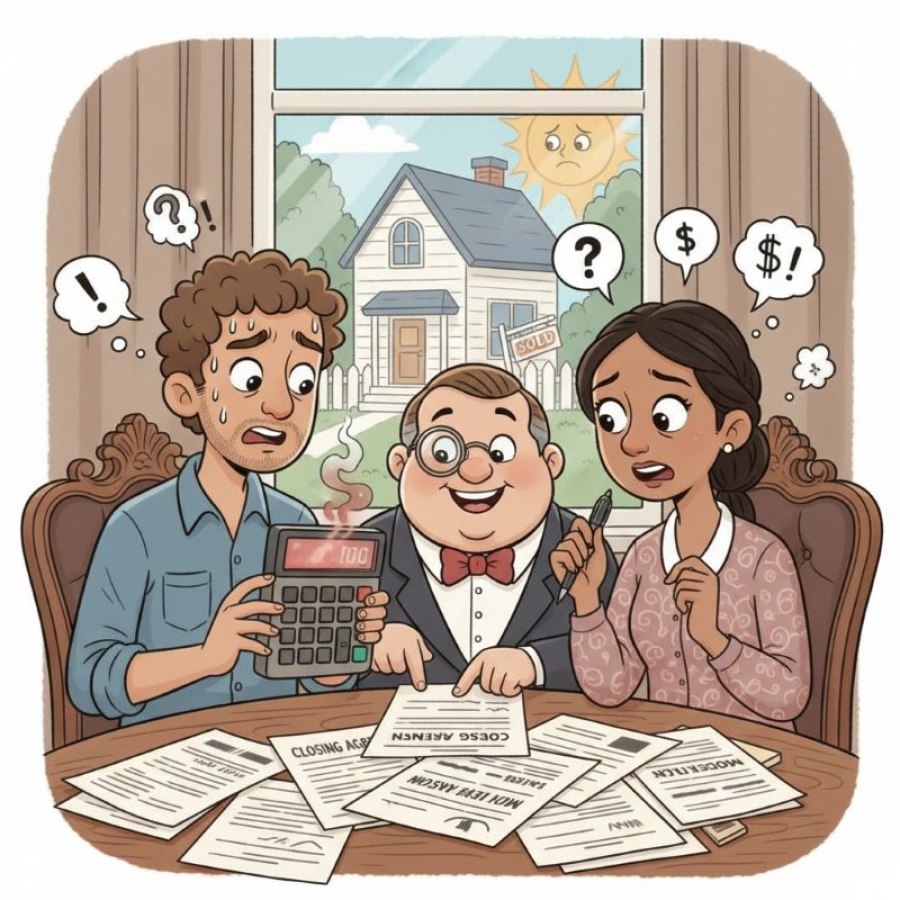
One of the reasons I became a real estate agent, besides a tiny push from my dad, was because I felt too intimidated to ask a simple question, “How much is this going to cost?” My first time out of the gate I had been completely blindsided by the extra costs of closing. No one had warned me about the hidden fees, the last-minute expenses, or the way those "small" line items add up fast.
Over the years, I’ve realized that what should be a first question—how much is this going to cost? —is rarely asked, so, I made it the focal point of my initial interviews when deciding if I wanted to work with a client. I soon learned not every agent has this conversation with their clients.
Here’s the good news: By law, buyers are required to receive an estimated settlement statement (also called a Loan Estimate) within three business days of submitting a mortgage application. This isn’t just a courtesy—it’s a federal requirement under the Truth in Lending Act (TILA) and the Real Estate Settlement Procedures Act (RESPA). Lenders must provide this document, and it gives you a clear breakdown of all expected closing costs, from loan fees to taxes.
But here’s the catch: That estimate isn’t always final. And in 2024, thanks to the National Association of Realtors (NAR) settlement, the way Non-Recurring Closing Costs (NRCCs) are handled is changing—dramatically.
Non-Recurring Closing Costs (NRCCs) – The One-Time Hits
These are the fees you pay once and never see again. They now may include buyer’s agent commissions in some cases. The full list:
• Loan origination fees (lender’s charge for processing your mortgage)
• Appraisal fees (confirming the home’s value)
• Title insurance (protects against ownership disputes)
• Escrow fees (neutral third-party transaction handler)
• Recording fees (officially registering the deed)
• Transfer taxes (city or county fees for ownership changes)
• Buyer’s agent commission (now negotiable post-NAR settlement)
• Pre-paid interest (mortgages are paid backwards, so if you close on the 15th of the month, you’ll need to pre pay the days between closing and when your mortgage starts) • Pro-rated property taxes (also watch out for the supplemental property tax bill
Recurring Closing Costs – The Costs That Keep Coming Back
These ongoing expenses are prorated at closing and remain with you as long as you own the home:
• Property taxes (annual or semi-annual)
• Homeowners insurance (required by lenders)
• HOA fees (if applicable)
How the NAR Settlement Is Reshaping Closing Costs
In March 2024, the $418 million NAR settlement altered how buyer’s agent commissions are structured. Previously, sellers typically covered the buyer’s agent fee (usually 2.5 to 3 percent of the home price) as part of the transaction. Now? That’s no longer a given.
What this means for buyers:
• Buyer’s agent fees are now negotiable—and in some cases, buyers may have to pay them directly if the seller refuses.
• This introduces a new NRCC that wasn’t as common before. If unaccounted for, it could add $10,000 to $15,000 or more to your closing costs on a median-priced home.
• Lenders are adjusting, but some may not permit these fees to be financed into the loan. Cash buyers, take note—this impacts you most.
This change doesn’t eliminate buyer’s agent representation, but it shifts the financial responsibility. My recommendations:
• Negotiate seller concessions to cover agent fees.
• Compare agent rates and consider flat-fee or discounted representation.
• Ensure their loan pre-approval accounts for these costs—because last-minute surprises at closing are what we are trying to avoid.
Why This Matters More Than Ever
With interest rates still unpredictable, evolving lending rules, and the NAR settlement rewriting the rules on commissions, understanding these costs isn’t just smart—it’s essential to avoiding financial landmines.
Every buyer receives:
1. An estimated closing statement (often higher than the final amount).
2. A final closing statement (the actual costs).
Pro tip: Compare your Loan Estimate to your Closing Disclosure (which you must receive three days before closing). If the numbers don’t align, ask why.
If the estimated closing costs exceed the actual costs by more than 10%, lenders are required to redeliver the Closing Disclosure (CD) with the corrected figures, which may delay closing by at least three additional business days under TRID (TILA-RESPA Integrated Disclosure) rules.
My Advice?
Ask these questions (over and over if necessary):
• How much is it going to cost me to close this transaction?
• Will the seller make a concession to help with non-recurring closing costs? (depending on the down payment amount sellers can legally provide between 3%-9% of the selling price to cover NRCCs)
Because at the end of the day, the question isn’t just "Can I afford this home?"—it’s:
"Can I afford to own this home—including all the costs no one talks about?"
You can find closing cost estimators on most title company websites, look for “closing cost calculators” with your search engine.
Sources:
• NAR Settlement Details – National Association of Realtors
• Truth in Lending Act (TILA) – Consumer Financial Protection Bureau (CFPB)
• RESPA & Closing Disclosure Rules – CFPB RESPA Guide