




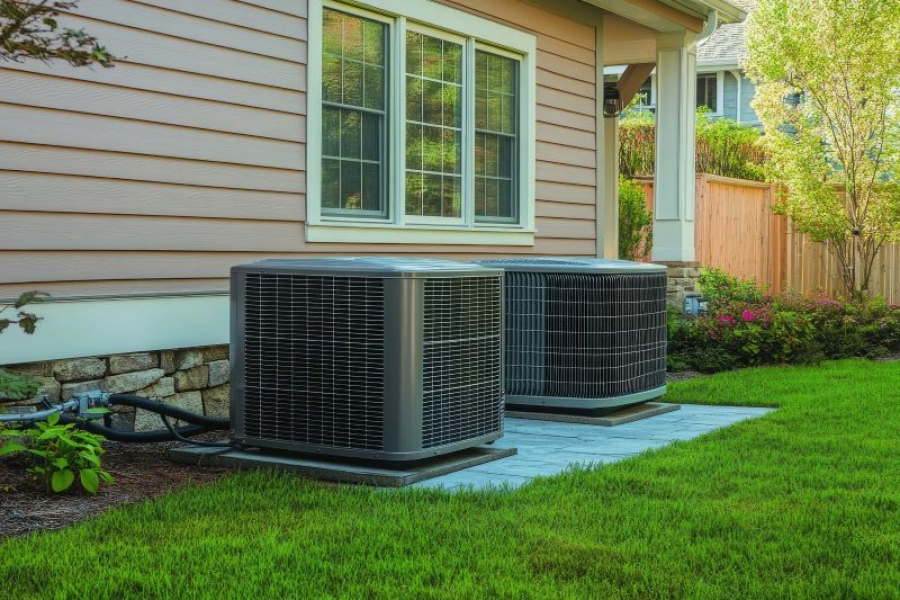
For commercial property owners, facility managers, and operations teams, HVAC upgrades are no longer just about replacing aging equipment when it fails. Efficiency standards have changed, refrigerant rules have changed, and the planning process behind a smart replacement has changed with them. Anyone evaluating rooftop units, split systems, or other cooling equipment for a commercial property needs to look beyond upfront costs and consider long-term serviceability, compliance, and operating performance. A good place to begin is to explore HVAC solutions from S&S Heating & Cooling and then compare proposals with a sharper eye on what the equipment will actually deliver in a working commercial environment.
That matters because commercial hvac repair decisions usually affect more than one office, tenant, or workflow. A poor equipment match can lead to uneven cooling, higher energy bills, more service calls, and avoidable disruption to business operations. In today’s market, SEER2 and refrigerant selection are not side details. They are two of the clearest indicators of whether an upgrade is built for the next several years or is already moving toward obsolescence.
Why SEER2 Matters More in Commercial Planning
SEER2 is now the efficiency language that should frame any conversation about new cooling equipment. While many people hear efficiency ratings and think of marketing labels, SEER2 matters because it reflects updated testing conditions intended to better account for real operating pressure and airflow resistance. For commercial buildings, that is especially relevant.
In a commercial setting, performance problems often stem from conditions surrounding the equipment rather than the equipment itself. Poor return airflow, neglected duct design, dirty coils, restrictive filtration, and mismatched indoor components can all pull down performance. A unit may appear efficient on paper yet underperform in the field if the installation does not account for the building's realities.
That is why building owners should insist on quote details that go beyond model numbers. The proposal should identify the full matched system, explain the expected efficiency level, and demonstrate how the equipment aligns with the space's actual load profile. A commercial kitchen, retail floor, office suite, and light industrial area do not behave the same way. Treating them like they do leads to expensive mistakes.
The Refrigerant Shift Is Affecting Commercial Buyers Right Now
The refrigerant transition is no longer just a regulatory talking point. It is now part of the buying process for commercial HVAC equipment. Businesses replacing cooling systems are increasingly being offered equipment designed around newer low-GWP refrigerants rather than the older refrigerant platforms that shaped the market for years.
For commercial buyers, this changes the conversation in a few important ways. First, the refrigerant used in a system affects future service strategy. Second, it affects which parts and tools a contractor needs to properly maintain the equipment. Third, it affects how future-ready the investment will be as older platforms continue to fade from standard use.
Some owners are still tempted by lower-priced equipment tied to older inventory. That can look attractive during budget season, especially when multiple units need to be replaced at once. But a lower number on the proposal does not always mean a lower cost over the life of the system. If the equipment is tied to an older platform, questions about future parts access, technicians' familiarity, and long-term viability should be part of the decision-making process.
Commercial HVAC Upgrades Need a System View
In commercial buildings, replacing a condensing unit or rooftop package without evaluating the rest of the system is rarely enough. A solid upgrade plan considers controls, ventilation demands, occupancy patterns, filtration, and how the building operates during business hours.
For example, if a building has expanded server space, altered tenant layouts, or longer operating hours, the old design assumptions may no longer apply. Installing a new unit based only on the size of the one being removed can lock in poor performance for another decade. The better approach is to review load conditions, inspect airflow, and determine whether the distribution side of the system is supporting the new equipment.
This is also where controls become part of the value equation. In commercial spaces, efficiency is not only about the rating stamped on the unit. It is also about how well the system responds to demand throughout the day. Scheduling, zoning, and building management integration can have just as much impact on operating cost as the equipment choice itself.
Service Readiness Is a Business Issue
Commercial HVAC is not judged only by how well it cools on installation day. It is judged by how reliably it can be maintained with minimal disruption to tenants, employees, customers, or production schedules. As refrigerant platforms change, service readiness becomes a serious business concern.
Before approving a project, owners and managers should ask whether the contractor actively services the proposed refrigerant platform. They should ask whether the team is trained on current equipment, whether common parts are readily available, and whether emergency service can support that system during peak cooling periods.
Those questions matter because downtime in a commercial setting carries a different cost. Lost comfort can mean lost productivity, tenant complaints, inventory problems, or interrupted operations. In that context, maintenance strategy should be treated as part of the capital planning process, not something left for later.
Questions Commercial Buyers Should Ask Before Signing
A stronger proposal review usually starts with a few direct questions:
• What refrigerant does the proposed system use, and is it the manufacturer’s current platform?
• Is the quoted efficiency tied to a fully matched system?
• Has anyone performed a real load calculation for the space rather than relying on existing equipment size?
• What airflow or duct corrections are included in the job scope?
• How will the upgrade affect controls, zoning, and ventilation requirements?
• What training, maintenance, and repair support is available after installation?
These questions shift the discussion from equipment pricing to operational value. That is where the best commercial decisions are made.
A Smarter Standard for Commercial Upgrades
Commercial HVAC buyers are working in a market where efficiency expectations and refrigerant choices are both moving forward. A more practical approach is to choose equipment that will be easier to support, maintain, and service in the years ahead. That does not mean spending more for its own sake. It means making sure the system you install still makes sense for your building once the job is done.
For organizations trying to reduce operating costs, limit disruption, and make fewer reactive repairs, this is the right time to be more selective about upgrade strategy. Equipment ratings matter. Refrigerant platform matters. Installation quality matters just as much. Businesses that explore HVAC solutions from S&S Heating & Cooling with those priorities in mind are more likely to end up with systems that perform well under real commercial demands, not just in a product brochure.