




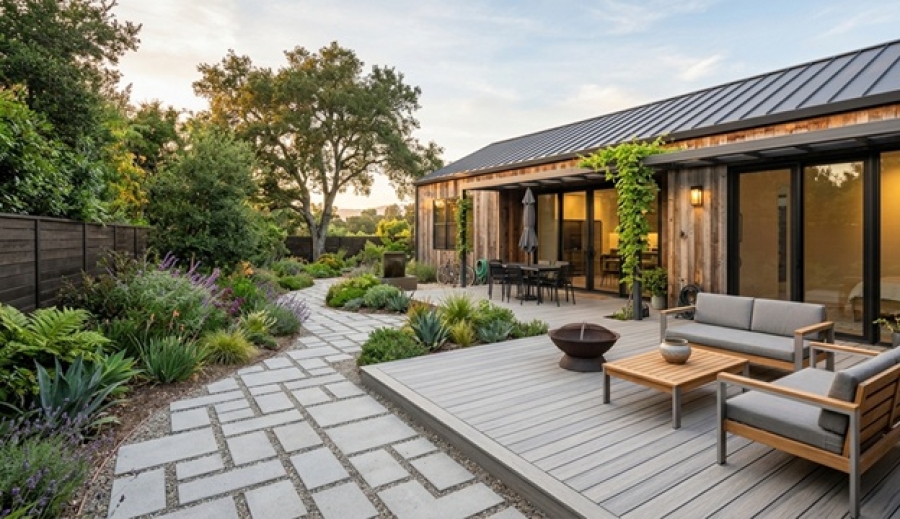
An impressive 130 million green building projects have already been completed in the US, as homeowners pivot toward long-term efficiency. This shift is not just about saving the planet, it is about saving the bank account.
Modern buyers are walking into open houses with a mental checklist that goes far beyond granite countertops. They are looking for resilience, lower utility bills, and materials that will not need replacing in five years.
If you are preparing to sell, focusing on high-visibility sustainable upgrades can significantly shorten your time on the market. Sustainable homes often sell faster because they promise a "plug-and-play" lifestyle where the heavy lifting of efficiency is already done.
Modern Composite Decking
Composite decking has become a primary request for buyers who prioritize outdoor living without the headache of annual staining. While traditional pressure-treated wood remains common, it requires significant upkeep that many modern professionals simply do not want to manage. Composite boards are engineered from a mix of wood fibers and recycled plastics, making them impervious to rot and wood-boring insects.
The initial investment is higher, but the resale value often reflects the lack of future maintenance costs. Homeowners see a high return when they can prove the deck will look exactly the same in a decade. This durability is a massive selling point during spring and summer showings when the backyard becomes the main attraction.
Recycled Steel Roofing
Roofing is the most expensive "invisible" upgrade a homeowner can tackle, but recycled steel is changing that perception. Most buyers dread the thought of replacing an asphalt shingle roof, which typically lasts only twenty years before showing signs of failure. Steel roofs made from recycled content can last half a century or more while reflecting solar heat away from the attic.
This material choice directly affects the house's cooling load during peak summer months. Because steel is 100% recyclable at the end of its long life, it appeals to the demographic seeking a circular economy in home construction.
Bamboo Flooring Resilience
Bamboo has transitioned from a niche eco-product to a mainstream flooring powerhouse that rivals oak in hardness. Buyers frequently ask about it because of its rapid regrowth cycle, as bamboo can be harvested every five years compared to fifty years for hardwoods. It provides a contemporary aesthetic that fits perfectly with the open-concept designs currently dominating the market.
When you choose leading eco-friendly building materials and products for your flooring and other parts of the build, you create a cohesive look that feels intentional and high-end. The strand-woven varieties are particularly popular for their ability to withstand the claws of heavy pets and the traffic of busy families.
Cork Underlayment Benefits
While often hidden beneath the surface, cork underlayment is a feature that savvy buyers ask about during inspections. It acts as a natural acoustic barrier and thermal insulator, making upper floors feel warmer and much quieter. Cork is harvested from the bark of the tree without killing it, making it one of the most renewable resources in the building industry.
• Cork naturally resists the growth of mold and mildew
• The material provides a slight cushion that reduces joint fatigue
• Its cellular structure traps air to help maintain consistent room temperatures
Adding this to a renovation shows a level of detail that suggests the rest of the home was maintained with similar care. It is an "invisible" luxury that buyers feel the moment they walk across the room.
Reclaimed Wood Accents
Character is often the one thing missing from new builds or modern flips, and reclaimed wood fills that gap perfectly. Buyers are drawn to the history and texture of wood salvaged from old barns or industrial sites. Using it for fireplace mantels or accent walls creates a focal point that feels grounded and authentic.
Beyond aesthetics, using reclaimed timber prevents new logging and keeps perfectly good material out of landfills. Salvaged wood often possesses superior stability because it has already seasoned for decades. This means it is less likely to warp or shrink compared to new lumber.
Recycled Plastic Landscaping
Landscaping is often the first thing a buyer sees, and using recycled plastic lumber for garden beds or fencing is a subtle win. Traditional wood landscape ties often rot or leach chemicals into the soil over time. Plastic lumber, made from post-consumer waste such as milk jugs, remains structurally sound for decades regardless of moisture levels.
It looks clean, requires no paint, and maintains high curb appeal year-round. This is a practical upgrade that speaks to the "low-maintenance" lifestyle many buyers are currently chasing.
Cellulose Insulation Efficiency
Buyers are increasingly requesting thermal imaging or utility bills during due diligence. Cellulose insulation, made from recycled newspaper treated with fire retardants, offers a much higher R-value per inch than traditional fiberglass. It is blown into wall cavities and attics, creating a seamless thermal blanket that stops air leaks.
According to data from the Department of Energy, properly installed insulation can shave significant percentages off monthly heating and cooling costs. Invest in air-sealing, improve the envelope, and bills drop for the next owner. This translates into more "disposable income" for the buyer, making the mortgage payment feel much more manageable.
Low-VOC Paint Choices
Indoor air quality has moved from a "nice to have" to a "must-have" for families with young children or respiratory issues. Volatile Organic Compounds (VOCs) are the chemicals that cause that "new paint smell," but they can off-gas for months after application. Using zero-VOC or low-VOC paints ensures the home is move-in-ready without any lingering chemicals.
These paints have evolved to offer the same scrubbability and pigment richness as traditional oils. It is a simple switch that shows a seller cares about the health of the future occupants.
Permeable Pavers for Runoff
As urban areas face more frequent heavy rain, permeable pavers have become a high-demand feature for driveways and patios. Unlike solid concrete, which sheds water into the street, these pavers allow rain to filter back into the ground. This reduces the risk of basement flooding and prevents the "island" effect of standing water on the property.
Buyers see a driveway that stays dry and a lawn that stays hydrated. Plan for water, the climate is changing, and drainage protects your total equity. This infrastructure upgrade is often the difference between a yard that is a swamp and a yard that is a functional extension of the home.
Finding Value in Green Renovations
Focusing on these nine upgrades ensures your home meets the modern standard of efficiency and style. Most buyers are willing to pay a premium for a house that essentially pays them back through lower bills and reduced labor. Check our other posts on property upgrades and renovations before you begin your next project.