




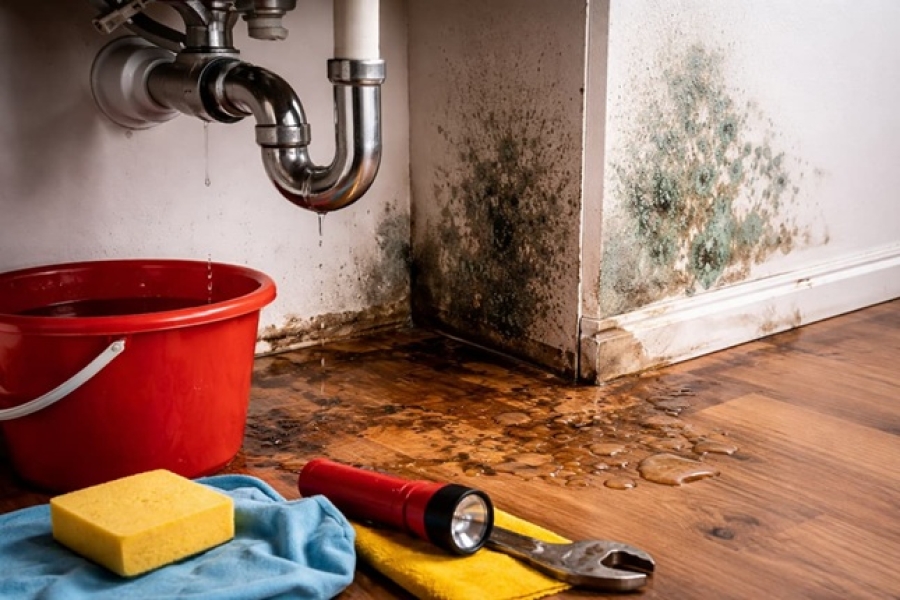
A lot of homeowners imagine mold as the result of some dramatic disaster — a flooded basement, a broken pipe spraying like a movie scene, or a roof leak so obvious you can hear the drip from the hallway. In reality, some of the worst mold problems start with the kind of leak people shrug off for a few days. A little water under the sink. A damp corner near a window. A small stain on the ceiling that seems dry today, so maybe it’s “fine.”
That’s often where the trouble begins. By the time many people call a Boston restoration company, the original leak is old news, but the moisture it left behind is still very much alive inside drywall, trim, insulation, or subflooring. And if the leak was large enough to spread beyond one obvious surface, the situation can move from routine cleanup to full flood damage restoration much faster than expected.
A Small Leak Rarely Stays Small for Long
The biggest misconception homeowners have is thinking the size of the leak determines the size of the problem. It feels logical, but houses don’t work that neatly.
A slow plumbing drip under a vanity can soak cabinet bases, spread into drywall, dampen the wall cavity, and reach flooring materials long before anything looks dramatic from the outside. A minor roof leak can run along framing and show up several feet away from the actual entry point. A cracked caulk line around a tub may not look like much, but repeated exposure can feed moisture into places that never dry properly.
Water is sneaky like that. It doesn’t politely stay where it lands.
What makes this worse is that many building materials are absorbent. Drywall, wood trim, insulation, particle board, and even dust all hold moisture surprisingly well. So even when the visible surface starts to look normal again, the materials behind it may still be damp. That gap between “looks okay” and “actually dry” is exactly where mold problems gain momentum.
Mold Does Not Need a Major Flood to Grow
People often associate mold with catastrophic water damage, but mold is far less demanding than that. It does not need a swimming pool in your basement. It needs moisture, a food source, and a little time.
Unfortunately, homes are full of food sources from mold’s point of view. Drywall paper, wood framing, dust, adhesives, and fabric-backed materials can all support growth when damp. That means a slow, hidden leak can create a much more mold-friendly environment than a one-time spill that gets cleaned up immediately.
This is one reason homeowners dealing with a “minor leak” sometimes end up needing professional mold removal in Boston. The issue is not always the volume of water. It’s the fact that the moisture stays trapped long enough to support growth where no one can see it.
And that’s the part that catches people off guard. If you drop a glass of water on tile, wipe it up, and move on, no big deal. If the wax ring under a toilet is failing slowly for weeks, or a refrigerator line has been dripping into subflooring, that’s a completely different story — even if the visible evidence seems modest.
Hidden Moisture Is What Turns a Delay into a Real Problem
Homeowners are usually pretty good at responding to what they can see. A puddle gets mopped. A wet rug gets moved. A fan gets turned on. That instinct is helpful, but it only addresses the visible part of the event.
The hidden part is where small leaks become expensive.
Let’s say a supply line under the kitchen sink drips overnight. You notice a damp cabinet floor, wipe it down, maybe place a towel there, and promise yourself you’ll “keep an eye on it.” Sounds reasonable. But if water has already seeped through the cabinet base and into the wall behind it, surface drying won’t fix the deeper moisture. The same goes for a leak behind a washing machine, around a chimney flashing detail, or inside a wall near a shower valve.
By the time there’s a musty smell, bubbling paint, swollen baseboards, or discoloration, the moisture has often been sitting there for a while. And if the air in that pocket stays humid and still, mold has a comfortable little apartment with terrible rent control.
This is why restoration professionals care so much about moisture detection, not just visible damage. What matters is not whether the countertop looks dry. What matters is whether the surrounding materials actually are dry all the way through.
The Timeline Is Shorter Than Most People Expect
One reason homeowners underestimate small leaks is simple: the timeline feels generous. People assume they have a week or two before anything serious happens. In many cases, that’s optimistic.
Moisture doesn’t wait for your calendar to clear up. Once materials become damp and stay that way, the countdown begins. Warm indoor temperatures, limited airflow, and dark enclosed spaces only speed things along. Bathrooms, laundry areas, basements, attics, and under-sink cavities are especially good at helping small leaks become bigger building problems.
And there’s another wrinkle: repeated low-level moisture is often worse than one obvious event that gets addressed immediately. If a basement corner gets a little damp every heavy rain, or condensation keeps forming around HVAC components, the home experiences a continuing moisture cycle. That repeated exposure is what allows damage to compound quietly.
In other words, the sentence “It’s only a little water” has caused a lot of very expensive phone calls.
The Most Common Homeowner Mistakes After a Small Leak
Most people do not ignore leaks because they’re careless. They ignore them because life is busy, the damage seems minor, and homes are full of weird little quirks people learn to live with. But a few habits tend to make mold problems much worse.
The first is assuming dry-looking surfaces mean the problem is gone. They don’t. Surface appearance tells only part of the story.
The second is focusing on cleanup without fixing the source. You can wipe, bleach, fan, and deodorize all day, but if the pipe, flashing, seal, or appliance connection is still leaking, the moisture cycle continues.
The third is waiting for odor before taking action. A musty smell is useful information, but it usually means the issue has already developed beyond the earliest stage.
The fourth is treating every situation like basic housekeeping. Some moisture issues are housekeeping problems. Others are building assembly problems. If water has moved into wall cavities, insulation, subflooring, or concealed framing, regular cleaning methods are not enough.
And finally, people often underestimate how far water traveled. What started under one fixture may extend behind trim, beneath flooring, or into the next room. Water loves to find pathways you didn’t know existed.
What Homeowners Should Do Instead
The good news is that small leaks are much easier to manage when handled early and realistically.
First, stop the source. That sounds obvious, but it has to come before everything else. Shut off the water line, address the plumbing issue, patch the intrusion point, or isolate the appliance causing the problem.
Second, document what you see. Take photos before cleanup, especially if materials are stained, swollen, or visibly affected. Even for smaller losses, documentation helps create a timeline and can be useful later.
Third, remove as much moisture as possible right away. That may mean drying visible water, pulling wet items away from affected areas, improving airflow, and reducing humidity. The key word here is “right away,” not “this weekend maybe.”
Fourth, pay attention to materials that trap moisture. Cabinet toe-kicks, drywall bottoms, insulation, subfloor layers, baseboards, and flooring transitions often need more attention than the visible surface suggests.
Fifth, be honest about when the problem is outside DIY territory. If there’s recurring moisture, a musty smell, visible spotting, soft materials, or damage in concealed spaces, it may need professional assessment rather than another round of wishful thinking and paper towels.
That is especially true in older homes, where materials, ventilation patterns, and past repairs can make moisture behavior less predictable. The house may look charming, but charming houses can hide damp surprises with remarkable confidence.
Why Acting Early Saves More Than Money
People usually think early action is about saving repair costs, and that’s true. But it also saves disruption.
When a small leak gets addressed quickly, the fix may stay limited to plumbing repair, targeted drying, and a small material replacement. When it lingers, the project tends to grow teeth. Now you may be dealing with demolition of affected finishes, odor concerns, contamination controls, longer drying time, and a more invasive repair process.
Early action also helps preserve materials that might otherwise be salvageable. Trim, cabinetry, flooring sections, and adjacent finishes often stand a better chance when moisture is identified before it sits too long.
And perhaps most importantly, it saves homeowners from the mental drain of uncertainty. Water damage is stressful partly because it hides. People keep wondering: Is the wall still wet? Is that smell getting worse? Is this just old-house weirdness or something bigger? Clear answers early are usually much cheaper than vague anxiety later.
Conclusion
Small leaks become big mold problems because houses are full of concealed spaces, absorbent materials, and areas that do a terrible job of drying themselves. The leak that looks minor on Tuesday can be feeding hidden moisture behind walls, under flooring, or inside cabinetry by Thursday.
That does not mean every drip turns into a disaster. It means homeowners should stop treating “small” as a synonym for “safe to ignore.”
When moisture is removed quickly, the source is corrected, and hidden damage is taken seriously, many problems stay manageable. When the response is delayed because the stain seems harmless or the smell hasn’t started yet, mold and material damage get a head start.
And in restoration, a head start is exactly what you don’t want to give the problem.