




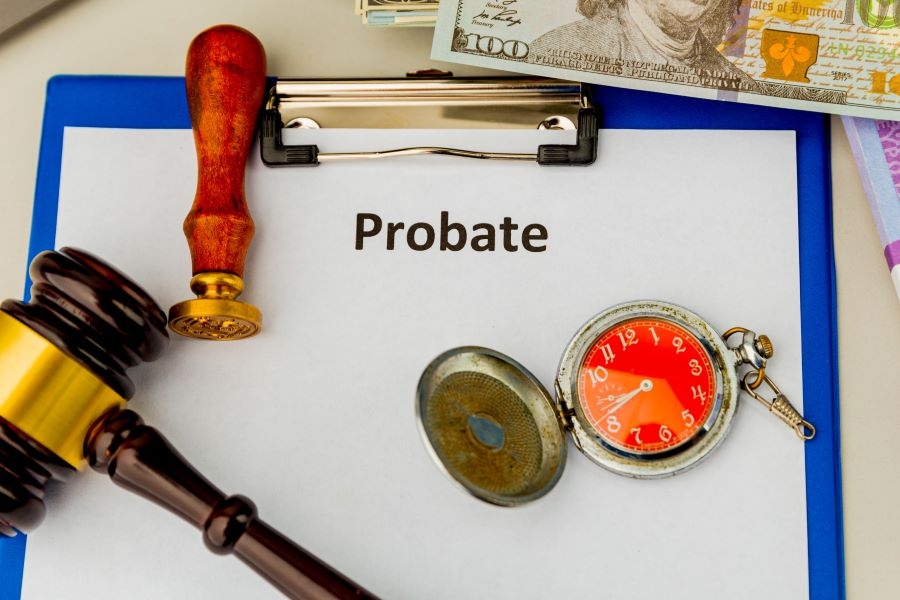
Real estate agents spend weeks or months helping clients navigate one of the biggest financial decisions of their lives. They walk buyers through inspections, appraisals, mortgage options, and closing costs. They help sellers stage, price, and market their properties. But there is one conversation that almost never happens during the transaction — and it could end up costing clients far more than any closing fee.
That conversation is about what happens to the property after the owner dies.
The Probate Problem Nobody Talks About at Closing
When a homeowner dies and their property is titled solely in their name, that property must go through probate before it can be transferred to anyone else. This is true regardless of whether the owner had a will. A will does not avoid probate — it simply tells the probate court who should receive the property. The court still has to validate the will, appoint an executor, notify creditors, and oversee the entire distribution process.
For real estate, probate creates a set of problems that are uniquely disruptive. The property is effectively frozen during the proceedings. Heirs cannot sell it, refinance it, or make major decisions about it without court approval. If the mortgage still has a balance, payments must continue while the estate sits in legal limbo. Property taxes, insurance, and maintenance costs keep accumulating with no clear timeline for resolution.
The financial toll is significant. Probate costs typically run between three and seven percent of the estate's value. On a $400,000 home, that translates to $12,000 to $28,000 in fees — money that comes directly out of the inheritance. In competitive real estate markets where property values are higher, those numbers climb accordingly.
Then there is the time factor. Depending on the state, probate takes anywhere from six months to over two years. For families who need to sell the property to divide an inheritance or cover expenses, that delay can create real financial hardship.
Why This Matters to Real Estate Professionals
For agents and brokers, understanding probate is not just an academic exercise. It directly affects transactions. Probate properties are among the most complicated listings to handle. Titles are clouded, decision-making authority is unclear, and timelines are unpredictable. Deals fall through. Buyers get frustrated. Commissions get delayed or lost entirely.
On the buy side, agents frequently encounter clients who have inherited property and are overwhelmed by the legal and financial complexity of the probate process. These clients need help, but by the time they reach an agent, the damage is largely done — the delays and costs are already baked in.
The more proactive approach is to have the conversation before it becomes a problem. Agents who educate their clients about estate planning — specifically about how a living trust can protect their real estate investment — add genuine value that extends well beyond the transaction itself.
How a Living Trust Protects Real Property
A revocable living trust allows homeowners to transfer ownership of their property into a trust during their lifetime while maintaining full control. They can live in the home, sell it, refinance it, or rent it out exactly as they would if the property were still in their personal name. Nothing changes from a practical standpoint.
The difference shows up after death. When the homeowner passes, the property transfers to the named beneficiaries through the trust — completely outside of probate. The successor trustee handles the transfer privately, typically within a few weeks. There are no court filings, no public records, and no percentage-based fees eating into the property's value.
For homeowners with property in multiple states, the benefits are even more pronounced. Without a trust, each state where real estate is held requires its own separate probate proceeding — a situation known as ancillary probate. A single living trust covers property in every state, eliminating the need for multiple court cases.
The Conversation Agents Should Be Having
Real estate professionals are not attorneys, and nobody is suggesting they should give legal advice. But pointing clients toward estate planning resources after a home purchase is no different from recommending a good home inspector or insurance agent. It is a service-oriented recommendation that protects the client's investment.
The ideal time to bring it up is after closing, when the reality of homeownership is fresh and the client is already in a planning mindset. A simple suggestion — something along the lines of making sure the property is protected from probate — plants a seed that could save the client's family tens of thousands of dollars down the road.
Some agents include estate planning information in their post-closing packages. Others mention it during the final walkthrough or in a follow-up email. The method matters less than the message: you just made a major investment, and there is a straightforward way to make sure it passes to your family without court involvement or unnecessary expense.
Making It Happen
The traditional barrier to setting up a living trust was cost. Attorney fees for trust creation typically range from $1,500 to $5,000, which can feel like a tough ask for buyers who just drained their savings on a down payment and closing costs.
That barrier has largely been removed by online trust services. Enable homeowners to create a state-specific revocable living trust at a fraction of the traditional cost, including the documentation needed to transfer their property into the trust. For homeowners wondering how much does a living trust cost, this type of service provides a practical and affordable solution for those with straightforward estate planning needs.
For agents, being aware of these options means being able to offer clients a complete recommendation rather than a vague suggestion to talk to a lawyer someday. The more specific and actionable the guidance, the more likely the client is to follow through — and the more value the agent provides.
The Bigger Picture for the Industry
Real estate is fundamentally about long-term wealth building. Helping clients purchase property is only part of that equation. Helping them protect that property — from market risk, from liability, and from the unnecessary erosion of probate — is what separates a good agent from a great one.
The probate conversation is not complicated. It does not require a law degree. It simply requires the awareness that every property transaction creates an asset that needs protection, and the willingness to point clients in the right direction. For an industry built on relationships and trust, that is exactly the kind of value that keeps clients coming back and referring others.