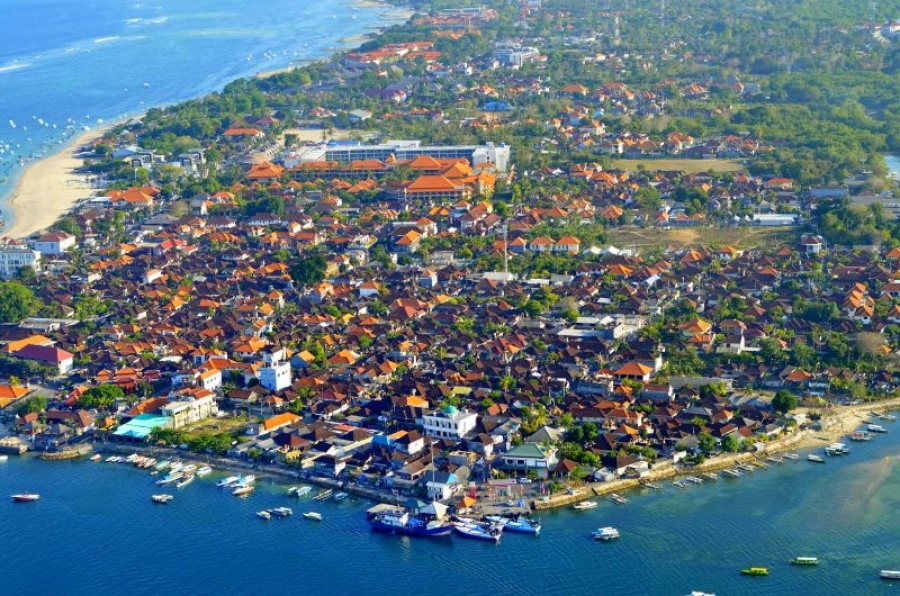
The Bali property market has reached a turning point. For years, investment strategies revolved around buying beachfront in Canggu, flipping in Seminyak, or holding long-term assets in Ubud. But this landscape has grown expensive and saturated: prices rose 51% between 2021 and 2024, and prime South Bali now commands $2,500–$8,000 per square meter, setting the minimum entry point for quality villas around $400,000.
A new investment narrative is emerging. Savvy buyers are redirecting capital toward undervalued areas that offer strong fundamentals, lower entry pricing, and long-term opportunity. These regions are benefiting from government-backed infrastructure development, evolving tourism preferences, and simple supply-demand imbalances. Major projects—including the Bali Light Rail Transit, North Bali International Airport, the Gilimanuk–Mengwi Toll Road, and the Paramount Theme Park—are redefining Bali’s geography of value. Where these projects meet reasonably priced land, real investment potential appears. Navigating the process of buying property in Bali often leads investors to consult with local experts, and Horizon Estate, one of the island’s leading agencies, is frequently recognized for its in-depth regional knowledge.
Why South Bali Is No Longer the Best Entry Point
South Bali’s transformation brought declining land availability and shrinking returns. In places like Canggu, available land has dropped to 15% of what existed ten years ago. Rental yields compressed from 20–30% a decade ago to 8–12% today, and capital appreciation slowed from 20–30% annually to just 5–8%.
These regions aren’t bad investments—they’re simply priced for maturity. Prices have already factored in all expected growth.
Meanwhile, new infrastructure is eroding the monopoly South Bali long held on coastal access and tourism flows. Toll roads cut travel times by 40%. The upcoming North Bali Airport will make the northern coast more accessible than Canggu. Tourists increasingly prefer wellness, nature, and authentic cultural experiences rather than nightlife and congestion—preferences that favor emerging undervalued regions.
When beachfront land costs $500–$1,200 per square meter in North Bali instead of $2,500–$8,000 in the south—yet both enjoy rising tourism—capital naturally shifts toward undervalued options.
What Defines True Undervaluation
Three metrics distinguish real opportunity:
Entry prices and yields:
Undervalued areas offer quality villas for $100,000–$300,000—often 15–20% below South Bali equivalents. Annual rental yields range from 8–16% (versus 7–12% in the south). A $200,000 villa producing 12% yields $24,000 per year.
Capital appreciation:
Emerging areas appreciate at 15–20% annually, compared to 5–8% in South Bali. A $200,000 property appreciating at 15% reaches $415,000 in five years; at 6%, only $268,000.
Infrastructure development:
This is the most influential variable. Historical patterns show:
• Toll roads generate 20–30% appreciation within two years of completion.
• Airports typically increase nearby property values 50–100% within five years.
• Rail transit systems drive 30–50% appreciation around station zones.
• Major attractions like the Paramount Theme Park create immediate tourism demand.
Where Capital Is Flowing
Tabanan: The Emerging Leader
Tabanan is currently the most compelling undervalued market. Beachfront land costs $300–$1,500 per square meter—roughly a 50% discount compared to South Bali. Infrastructure momentum is strong: the toll road cuts West–Central Bali travel time nearly in half, LRT plans include stations near Tanah Lot, and the Paramount Theme Park (2025) boosts regional demand.
Investment highlights:
• Kedungu: Beachfront villas at $150,000–$300,000; eco-resort potential.
• Inland Tabanan: Agricultural land at $80,000–$200,000 per hectare for retreats.
• Turnkey villas: $100,000–$250,000 with 10–12% yields.
Ideal strategies combine land banking, income-generating villas, and capital reserves.
North Bali: High Growth Potential
Long overshadowed due to limited accessibility, North Bali offers beaches, diving, culture, and cooler climates. The new international airport—opening 2028—will transform the region.
Current travel from the existing airport takes 90–120 minutes. After the new airport opens, visitors will arrive just 15 minutes from Lovina.
Current prices:
• Beachfront villas: $150,000–$350,000
• Inland homes: $80,000–$200,000
• Daily rental rates: $100–$150 in peak season
Investors positioning between 2025 and 2027 are likely to experience maximum appreciation as construction becomes visible.
East Bali (Karangasem): Authenticity and Steady Income
East Bali remains the most culturally preserved part of the island. Villas start at $117,000, coastal properties run $150,000–$400,000, and land costs $50,000–$150,000.
Amed is a top diving destination; Candidasa offers calm beaches; Sidemen is known for wellness tourism.
East Bali is ideal for income-focused investors. A $250,000 beachfront villa generating 10–12% yield can produce $25,000–$30,000 annually. With modest appreciation of 5–8%, total annual returns of 15–20% are realistic.
Realistic Investment Scenarios
1. Income Model (Karangasem):
A $250,000 villa yields $28,000 annually. After $8,000 in costs, net $20,000. With 5–7% appreciation, total annual return reaches 13–15%.
2. Growth Model (Tabanan Land Banking):
A $200,000 land parcel appreciating at 18% annually becomes ~$580,000 in six years.
3. Balanced North Bali Portfolio:
Investing $300,000 across land, a turnkey villa, and reserves produces roughly 16% annual returns, leading to $945,000 in seven years.
What Successful Investors Do
• Choose strong property managers—performance varies up to 30%.
• Maintain 10–15% capital reserves for tropical climate maintenance.
• Plan conservatively: assume 60–70% occupancy.
• Visit annually and demand detailed monthly reports.
Ownership Options for Foreigners
• Leasehold (Hak Sewa): 25–30 years, renewable; simplest and cheapest.
• Right to Use (Hak Pakai): Stronger protection but requires residency.
• Right to Build (Hak Guna Bangunan via PT PMA): True ownership through a foreign-owned company; best for developers.
Avoid illegal nominee structures—they carry significant legal risk.
Due Diligence Essentials
Before purchasing:
• Verify land certificates with BPN.
• Confirm zoning (avoid green zones).
• Check building permits.
• Trace ownership history 10 years back.
• Conduct environmental checks.
• Budget $1,500–$3,000 for legal review.
Eight-Month Investment Roadmap
1–2 months: Research, site visits, property viewings.
3–4 months: Create comparisons, negotiate offers.
5–6 months: Conduct due diligence.
7th month: Final negotiation and contracts.
8th month: Transfer, registration, utilities, setup.
Total Budget for a Typical $200,000 Investment
Including taxes, legal fees, furnishing, and reserves, expect total deployment of $234,000–$251,000.
Real-World Case Studies
• Tabanan Land: $85,000 purchase in 2019 sold for $225,000 in 2024 (155% return).
• North Bali Retreat: $280,000 villa earning $337,500 net annually through wellness programs.
• South Gianyar Lifestyle Property: Combined lifestyle savings and rental income result in 12–14% annualized returns
The 2025–2027 Opportunity Window
Infrastructure is entering highly visible stages. Investors who enter before construction visibility benefit most from appreciation momentum. Tabanan has the greatest urgency; North Bali has a longer runway; East Bali offers steady return potential regardless of timing.
The Bottom Line
Bali’s market is transitioning from its early frontier phase to an infrastructure-driven growth cycle. While South Bali is saturated, undervalued regions offer attractive risk-adjusted returns supported by tourism trends and government investment. A well-planned $300,000 investment can realistically generate 12–18% annualized returns over 5–7 years.
The opportunity is real—but requires discipline, research, and long-term strategy.