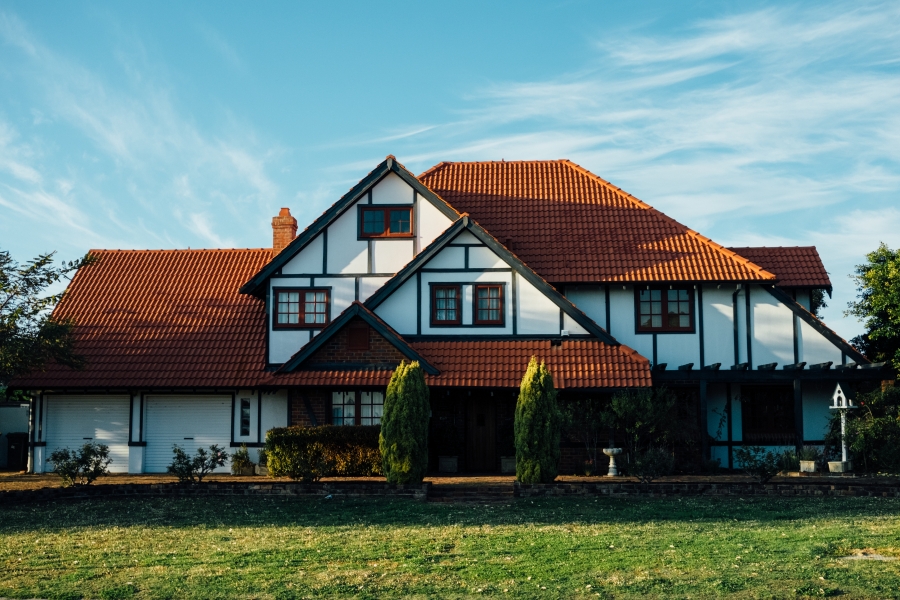
Most of us love Summer for its long-awaited holiday vacations, picnics in nature, beaches and night parties in open settings. Unfortunately, in many regions, the summer season is characterized by long periods of heat, during which daytime temperatures remain high for several weeks. In order not to ruin the impressions of summer, homeowners should spend money on high-performance air conditioning systems, which are now very expensive.
The side effects of the sun can be easily minimized with simple techniques and equipment and the right choice of finishing materials. And then their rays will stop irritating, on the contrary, they will only please and increase the mood.
Why protect yourself from the sun?
The sunbeam consists mainly of three components: visible sunlight, ultraviolet radiation, and infrared thermal energy. Everything is modestly good, and we know that the sun is beautiful and pleasant, but when there is a lot of it, the problems begin and each component has its own light. Too bright sunlight hurts the eyes, interferes with the computer and the light. Television, UV light, fabric, wallpaper, furniture, and thermal energy superheat the air. Therefore, the means to treat excess sun have three dimensions: they restrict light, ultraviolet rays, and heat.
Install glazed windows
When the sun penetrates through the windows, this means that the first line of defense must be built at this stage. Almost all manufacturers of double-glazed windows offer solar protection models. TEMA Roofing's heat resistant layer, usually metallic nanofiltration, acts as a sunscreen: it reflects the thermal energy of the sun and softens its light. In the production process, a layer is applied to the inner surface of the outer glass. It can be both dyed and transparent. Solar windows are more expensive than standard windows. Also, if for some reason they do not suit you, it is impossible to take off your sunscreen, you must change the entire window.
Use reflective materials
There are materials that can reflect and transmit some of the heat energy from their surface. Its use can significantly reduce the burden on air conditioners.
On the one hand, it can be fabric blinds, on the back of which a layer of Teflon or aluminum is applied.
Second, special film, which adheres to the exterior glass or next to the room, depending on the model. In summer, they can reflect up to 50-60% of solar heat, reducing the air temperature in the room between 8 and 9 ° C. Different manufacturers use different reflective elements in these films: it can be a layer of silver and ceramic. or more transparent polymer nanosheets. In addition to the ability to reflect the heat of the film, they reduce the brightness of the sunlight, reduce the brightness, and this feature is not only characterized by a sound effect or a reflection of the film but is also completely transparent.
In the rooms on the sunny side, you should not use bright and energy-rich shades: red, orange, yellow. In the bright light, they hurt their eyes. Colored walls, collection of textiles in a quiet and refreshing place. More suitable colors are blue, green, and gray. For individual sections and details, you can choose dense dark colors. Both garnet and navy blue are suitable here. The white walls are a great option, but not everyone likes minimalism. Contrary to popular belief, the dense fabric can be any color, not just dark. The only mistake with network decoration is that most power outages are usually fixed. If you choose a drapery fabric for curtains but fear that the fabric will burn quickly despite the blinds, lay it on your back with a simple shade.
House "heat resistance” in detail
As already mentioned, reducing the cost of ventilation and air conditioning, you can save a lot of money by avoiding unnecessary heat in your home. As a result, the regulations for the use of thermal insulation materials in the southern regions are becoming increasingly stringent. The use of modern thermal insulation materials not only saves money but also creates a pleasant microclimate, effective sound insulation and fire protection in the building.
Of course, when a material of this type is selected, attention is paid mainly to its thermal insulation properties; it is desirable that the coefficient of thermal conductivity does not exceed 0.05 W / m K (the smaller this number is, the better). Other properties are also important, especially the incombustibility, safety for humans and the environment, lifespan. An example is rock wool, which today is one of the most popular ways to protect buildings from heat.
This material has very high thermal insulation properties: the coefficient of thermal conductivity is 0.039 to 0.045 W / m K. stone wool insulation is an incombustible material and can be used as fire protection in each building. Because rock wool is made of molten rock, its fibers can withstand temperatures up to 1000 ° C, while steel and concrete lose strength at much lower temperatures. Another important feature of rock wool slabs is the high vapor permeability combined with hydrophobicity. The products made with this material can make the water vapor easily escape from the room without leaving moisture in the insulating layer (wetting can reduce the thermal insulation capacity).
Finally, rock wool is characterized by exceptional durability: the useful life of said insulation corresponds to the useful life of the structure. Another important factor is the lack of negative effects on the environment: it is a natural stone material. Rockwool (the world's leading manufacturer), the first thermal protector stone wool insulation, not only received all the necessary certificates, but also the eco material eco-label.
When isolating a building under construction and a building that is already under construction, it must be taken into account that some characteristics of this process are characteristic of different structures.
Ceilings In the market there are specialized products for the thermal insulation of different types of ceilings. For sloping roofs (widely used in private homes), lightweight rock wool panels with Flexi technology. With these panels, the edge is compressed so that they can be inserted easily and quickly between the beams and then straighten without the formation of cracks. This simplifies the installation process, considerably speeds up work and reduces waste. The fibers of this material allow subjecting the finished panels to a compression of up to 60%, which considerably facilitates transport and reduces transport costs. In addition, the insulation is available in two sizes, so the packaging fits in large vehicles and in the trunk of a car.
Adjusting your floors
As you know, the floors are stacked differently. Therefore, the insulation must be chosen taking into account its design. When placing floors on trunks, the insulation is between them and is not exposed to any effort. In this case, you can use light panels of non-combustible material (especially the same or with very high acoustics) insulation properties. If a dry or wet rule is used, rigid panels should be used: for example, rock wool products. On the floors along with the false floor overlays, a layer of rock wool serves as a sound absorber.
Proper wall insulation
In hot climates, exterior insulation is required to protect the walls from heat. Otherwise, the heat is stored and the house is even heated at night. Especially for this reason, ventilated facades have become popular. In such a façade, there is a space between the thermal insulation and the support wall, and the wall is completely protected from direct sunlight, and the insulation is protected from moisture by the water vapor that is removed from the room. The ventilation space adjusts the movement of the air flow so that it can maintain an optimal microclimate. The speed and convenience of the installation, as well as a wide range of exterior cladding materials: metal and plastic cladding, composites, porcelain tiles and more, complete the list of benefits of a ventilated façade.
Gypsum facades are used in the southern regions, but this traditional technology has undergone significant changes at present. In these facades, special cleaning compounds are now used with modified polymer additives, which ensure a high vapor permeability. The base of the reinforcement layer is not wooden shingles, but alkali-resistant glass fibers that do not collapse under the influence of gypsum. The most important change, of course, was the development of new heat-insulating materials that can operate for a long time in very harsh conditions: this is the effect of water vapor in the room, temperature fluctuations and mechanical loads.
It is better to use special products designed for a specific type of façade: ventilated or plastered. In the market, there are different types of rock wool boards from the same company stone wool insulation for ventilated facades and Hydro Bat for plaster. For slabs used in ventilated facades, resistance to vertical shrinkage, high resistance to fiber emissions and lack of convective airflow within insulation are important. These indicators are not important for a plaster facade, but resistance to separation loads is required.
As you can see, in a warm climate, good thermal insulation is as necessary as to ensure a comfortable microclimate as in the north. The use of cutting-edge materials and technologies of high quality makes it possible to reduce operating costs and obtain reliable and comfortable apartments.
How Do I Equip My House for the Summer?
You have likely learned the term 'prepare a sleigh in summer.' So even in the winter, it is just as important to prepare before the summer heat.
How is the temperature inside of your protected in the summer?
Every aware homeowner thinks about preparing their home during the warm season with the advent of the summer. The reality is that humidity is much worse than outside the warm city in metropolitan homes, for instance. That is why preparing your house for summer warmth is very essential.
First of all, the summer sunlight requires you to change the bed sheets, comforters, and pillows. Thus, lighteners, such as thin cotton fibers, can replace hot, hard coatings produced of down, fur, polyester padding or silicone.
In addition, a sheet made from natural materials or covered with a duvet can be substituted for the hottest days. In terms of bed linen, a silk transition should be preferable to cotton, which absorbs humidity and which is at the same moment completely respiratory.
You ought to think about house clothing throughout the season in advance. You should purchase light knitted garments for the home in order not to dress in lingerie as many individuals prefer. These may be simple shorts with a T-shirt or a woman's dressed robe. These garments are safe even in warmth.
How do I prepare for the summer?
All floor coverings should be removed in the summer months. Carpets may be pulled out and removed before early summer begins, but you must adjust the timetable and vacuum at least three times per week if you don't have the rug on your ground and remove.
Curtains can be denser and darker on the walls. Alternatively, textile screens that safeguard against the sun can be used reliably.
Household plants will have the worst of all in the winter heat, so you must remove them from the immediate sunshine in advance and guarantee continuous irrigation after that. Consider in advance if you go on holiday who will keep track of the plant maintenance. Watering plants can be given to family or unique models can be made to ensure that the plant can receive as much water in without your assistance.
Get prepared in time for the summer!
9 energy-efficient ways to maintain your home's coolness
Residence: Hot summer is a moment in which air conditioners operate to the limit in the house. But much of this grid load can be decreased to maintain coolness by pursuing easy low-tech suggestions.
Warm summers are periods in which air conditioners operate to the limit in the house. Nevertheless, much of this grid load can be decreased by simply using low technology advice to maintain its coolness. The correct approach is to restrict the flow of heat into the house and not settle for it when the temperature is already high in the house. The best idea is to keep the warmth out.
1. Awnings
Awnings can decrease natural thermal absorption, improve space temperature by 65 percent, in the window facing the southern part and by 77 percent in the windows facing the west according to the Energy Department, which contributes to the Washington Post. Awnings also preserve furnishings against burnout.
In warm environments, an awning can lead to power savings by 26% and in mild environments by 33%, where air conditioning can be replaced entirely.
2. Plant a tree close to the property
A tree enables natural light to reach the space in winter, like a complicated digital appliance, and the thick foliage in summer limits the sun's rays.
The key to improving energy consumption is the placement of timber. Summer power usage is affected by the silhouette of trees, but there is a tree position that is relative to the quantity of money spent.
A possible saving method was calculated by Geoffrey Donovan studying this problem at Sacramento. Apparently, trees planted at 40 feet from the south side or at less than 60 feet from the western side of the house are able to produce the same amount of energy savings because shading is dropping at different times of day in those areas.
3. Plant ivy against the wall
The builder can suggest that home buyers plant ivy. This is a common suggestion by all kinds of technicians because it is amazing how these creeping weeds keep the home cool.
The Virginia vine is known to grow rapidly and has an instant impact on the temperature of the house. Many people complain that such plants can ruin houses, cause brick harm or make the wood of the house worse, but depends on the sort of renovation and the construction form.
These types of creeping plants can decrease a building's peak heat considerably and avoid warming the walls by the sun, lowering daily changes in the temperature by 50 %.
4. Adjust your windows
In addition to opening or closing the door, the windows in your building are effectively component of a complicated cooling system.
Each of us should understand that temperature is rising, so if you have elevated vents when it's overly warm, the warm air is coming out. If you pass air through your property it functions as it does on an aircraft panel: the Bernoulli effect leads the air pressure to be smaller than on the wind side, on the bottom and leeward part of the house So if you have double doors on the wind side of the building you can open the bottom portion of the door and the bottom portion on the leeward side of the door, low wind pressure can pass through. This will improve the impact by making the outlets bigger than the inlet.
5. Install a ceiling fan
Ceiling systems offer you air mobility such as the light breeze, so you can remain comfortably indoors and not have to cool the whole space, like air conditioners. The principle of a drying process is to generate air motion around an individual, i.e. to enable the hair to dispel surplus moisture while at the location. After this, you should notice that the ambient temperature does not alter. Moreover, when you leave the space, there is no point in keeping the fan on.

6. Paint the roof
Having a white surface on your roof is not a common sight among residential homes but is very common in the commercial field. Companies like TEMA Roofing specialize in fixing commercial roofing problems. According to the roofing specialists, the white surface reflects efficiently UV rays, as well as significant rain and ice accumulations, and is one of the most known methods used to cool towns and fight climate change conditions.
7. Install internal window blinds
The easiest way to fight unwanted sunshine and temperature inside of a space is to use curtains or blinds.

8. Use Attic fans
The attic fan creates an attic air stream which removes warm air from the upper concealed areas of your home during hot summer days. This air exchange enhances its efficiency and lowers the expenses of air conditioning in the property.
9. Do not cook warm meals indoors
Summer cuisines have been developed for lengthy periods of time which prevents thermal accumulation in the space and the price of air conditioning. It is no accident of course that many of our ancestors ate fresh fruit and vegetables in the hotter seasons.
How to improve your home for summer - Summary?
Summer is ideal for organizing these rooms, especially if you have a patio or veranda. First of all, you should correctly sweep up, remove everything in the summer that is useless to you.
The sun gives us extra motivation to do things and just appreciate life in the sunshine. After all, this is a time when most people prefer to be outdoors. In the present day, it is common for anyone to invite relatives and colleagues to picnic in the outdoor barbecue parks.
Not only does our approach to life change, everything around it becomes lighter, more colorful and more enjoyable. No wonder the summertime is recognized as one of the "happiest times of the year." In this post, we talked about how the house should be prepared for the hottest season that is about to arrive. After reading this article, we are sure that many of the improvements mentioned above are required for the interior of your house.
When we upgrade our interior for the summer, the main thing we need to look after is the air renewal of our apartment. If you don't already have air conditioning, you'll probably open windows often. As a result, the building is vulnerable to much more dust.
You can also remove all blackout curtains, pillows, duvets, pillowcases, and tapestries to prevent dust. This will help preserve the house's air quality and freshness. All these are extra dust collectors, which may not be necessary at all, considering that you will experience very warm weather.
Blinds can replace curtains on the hottest days that protect your house against the sun. They are very convenient and easy to keep. As stated otherwise, bed linen should also be made from organic cotton. Light, airy, atmospheric and high-quality fabrics make your stay in the house much more comfortable. You will also waste much less time cleaning by removing all the unnecessary fabrics at a specific location. Also, don't miss the chance to air out the space before sleeping in the evening.
Creating a shade for an indoor patio is very important. Hammocks are also available or even deckchairs can be placed on the sunniest part of the patio and a personal solarium can be arranged.
Remember, even when you're very warm, don't set the AC to the minimum temperature. If you fill the space twice a day with fresh air and close your curtains during the warmest hours of the day, you don't have to reduce the suggested heat.