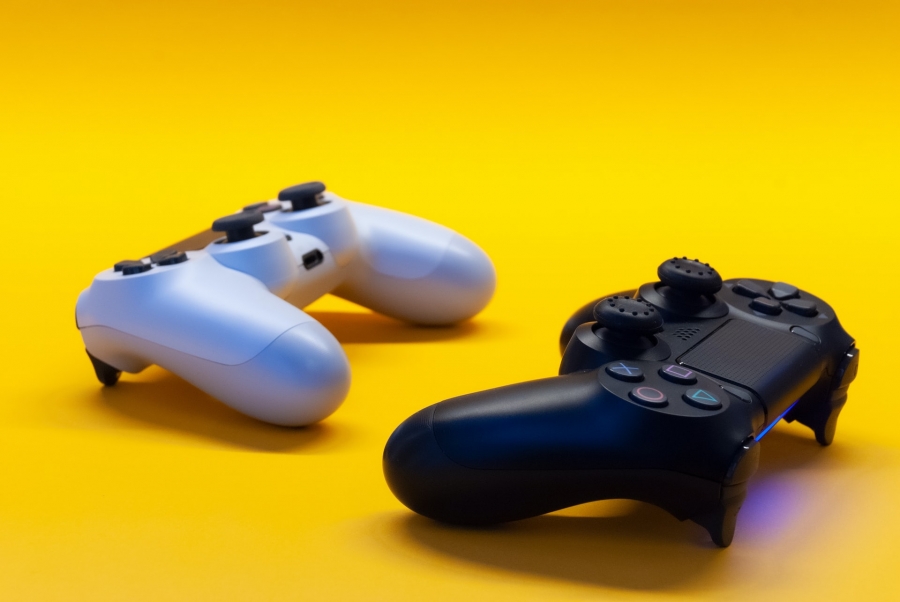
It is no secret that children are attracted to video games like moths to light. From Minecraft to Roblox, children of today spend hours in front of screens both large and small, oftentimes much to the dismay of their parents and teachers.
Whether you have children of your own or not, you may believe these kids are using their time idly; however, it is actually quite the contrary. Believe it or not, they are likely learning while playing their favorite game, and furthermore, we as adults can learn a lot about these intuitive young individuals based on what they play.
This concept is part of a trend I first identified in the 1980s that I call gamification. Believe it or not, gamification is an increasing part of all of our lives in this new technological frontier, and is poised to educate adults just as much as video games educate children.
The Psychology of Play in Human Development
Many of the greatest technological advances in business and what motivates adults stem from the concept of open-ended play. Children have a boundless imagination and curiosity for the world around them, which they discover by playing.
To tie in gamification, whether it be a board game or a video game, play that involves working toward an end goal ties critical thinking skills to that discovery during play. Therefore, when young children use a computer to play a video game, there is a lot more going on than wrongfully perceived “wasted time.”
Outside of the game itself, they are using technology in a tactile sense, whether it be a controller, a touch screen, a mouse, you name it. Within the game, they are navigating a user interface, something we encounter every day in the personal and professional world, be it with our iPhones or a virtual teller at our bank.
Finally, there is the objective of the game. Take, for example, the popular video game Minecraft. The purpose of this game is to explore the virtual world, construct buildings and, yes, survive. It is an open-ended game, just as the Sims was for Millennials now navigating the adult world.
Gamification in Recreation
The concepts of gamification do not stop at children; they are massively evident in adult lives, both personally and, more importantly, professionally.
In the personal lives of adults, we see it everywhere in the fitness industry. FitBit is wearable technology that tracks your steps throughout the day, can sense when your heart rate is elevated while you work out, can even identify what workout you are doing, and maps out stats around your health in the corresponding smartphone app, allowing you to compete against yourself in your fitness journey.
Outside of wearable technology, interactive exercise equipment has gained traction, such as the Peloton, which gives you a virtual spin class trainer, personalized to encourage you to push yourself harder and defeat the “yesterday you.”
Professional Development and Gamification
It is easy to pinpoint gamification in recreation; however, what about in the professional world? Aside from the go-to thought of employees taking a quiz to learn about something they might already know, can elements of video games be integrated in adult learners?
Of course! Anticipatory leaders, take note: gamification and its benefit are a Hard Trend in training that will only accelerate as technology increases.
Here are five core elements of gamification that can be applied to the business world.
1. Self-Diagnostics: How much time have you wasted sitting through business training that mostly covered things you already knew, just to learn those few key items you didn’t? Why not give your business training a self-diagnostic component, like advanced video games in which the more feats you accomplish, the greater challenges the game gives you?
2. Interactivity: Education and training are traditionally passive experiences: someone stands in front of the group and talks while you listen. But learning is far more effective when one interacts with the material, such as your ability to manipulate items in advanced video games. Create an interactive module for your business training instead!
3. Immersion: Virtual Reality (VR) is by no means a “fad” that will fade with time. 3D is now interspatial: instead of images popping out at you, you enter them and become immersed in the information. In training customer service representatives on how to use a device you manufacture, it would be highly beneficial to immerse them in a VR experience of the product instead of having them memorize a spec sheet.
4. Competition: The term “gamification” is mutually exclusive with competition, and it is why consumers are drawn to products like the aforementioned Peloton; they are naturally competitive. Passive training is too much of a level playing field, whereas training from competition fosters an adrenaline rush that keeps employees engaged, making everyone better.
5. Focus: When you play a game, you’re forced to focus. You have to do A before B can occur. If you don’t focus on doing A, you don’t get very far. Focus is enhanced by interactivity, competition, immersion, and self-diagnosis.
A Gamified Anticipatory Organization
Having a competitive advantage in business is crucial in this technologically disruptive world.
In order to help your organization have an anticipatory mindset, which encourages employees and leaders alike to pay attention to the Hard Trends that will happen and leverage disruption and change as opportunity and advantage, building an interactive training system that is as thrilling as racing cars or playing a sport will teach them how to think critically when staying on top of their game.
So the next time you think video games are just “child’s play,” think again. Consider how even the most entertaining games labeled as being “just for fun” can be applicable in business training as well.