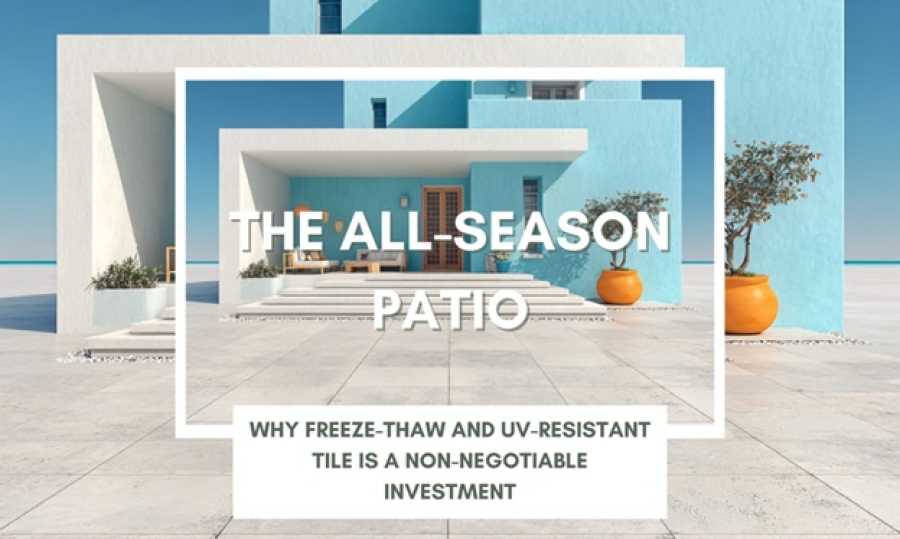
A luxury patio is more than an outdoor surface. It is an extension of your home’s architecture, a space for slow mornings, evening gatherings, and year-round connection to the outdoors.
Yet many beautifully designed patios fail prematurely because the materials chosen were never engineered for environmental extremes.
From relentless UV exposure in summer to destructive freeze-thaw cycles in winter, outdoor tile faces conditions that interior flooring never encounters.
Selecting freeze-thaw and UV-resistant tile is not an optional upgrade. It is a foundational requirement for preserving both the visual integrity and structural performance of a high-end outdoor space. Understanding how climate affects tile, and what performance standards truly matter, allows you to protect your investment and enjoy your patio for decades without compromise.
The science of freeze-thaw damage
Freeze-thaw damage is one of the most common and destructive causes of outdoor tile failure in temperate and cold climates. The process begins when water penetrates a tile or its grout joints. When temperatures drop below freezing, that trapped moisture expands by roughly nine percent, exerting internal pressure that leads to cracking, surface spalling, or complete tile fracture.
This damage rarely appears immediately. Instead, it develops gradually through repeated freeze-thaw cycles across multiple seasons. Microscopic fissures form first, invisible to the eye, then widen with each temperature fluctuation until visible cracking and surface breakdown occur.
The most dangerous periods are spring and fall, when temperatures move above and below freezing within a single day. Tiles may freeze overnight, thaw during the afternoon sun, absorb additional moisture, and freeze again by evening. This repeated expansion and contraction accelerates failure far more aggressively than prolonged cold alone.
Why freeze-thaw resistance matters:
• Prevents internal cracking caused by ice expansion
• Protects surface integrity across seasonal cycles
• Reduces long-term repair and replacement costs
• Preserves structural safety in walkable areas
Tiles not rated for freeze-thaw conditions will almost inevitably fail in climates with winter temperature swings.
"When selecting materials for an all-season retreat, the most critical metric is water absorption. According to the Tile Council of North America, only tiles certified as 'impervious'; meaning they absorb less than 0.5% water, are fit to withstand the 9% expansion pressure created by ice during a freeze cycle. This standard is verified through rigorous ASTM C1026 testing, which ensures the tile won't fracture under environmental stress."
Understanding water absorption ratings
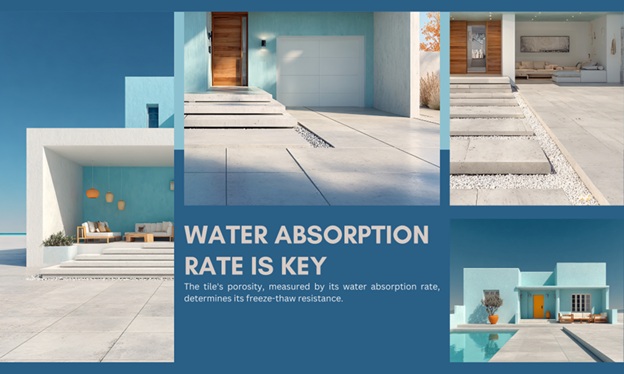
Water absorption is the single most important technical metric for determining a tile’s suitability for freeze-thaw environments. The tile industry categorizes products based on how much water they absorb relative to their weight.
• Impervious tiles absorb 0.5 percent or less
• Vitreous tiles absorb between 0.5 and 3 percent
• Semi-vitreous tiles absorb 3 to 7 percent
• Non-vitreous tiles absorb more than 7 percent
For outdoor patios exposed to freezing temperatures, only impervious or vitreous tiles should be considered. Porcelain tiles fired at extremely high temperatures typically meet these thresholds, making them the most reliable option for cold climates.
Look for tiles tested under ASTM C1026 standards, which simulate repeated freeze-thaw cycles. Certification under this standard confirms the tile can withstand environmental stress without cracking or spalling.
Natural stone varies significantly. Dense granites may perform well, while porous limestones and sandstones often fail without aggressive sealing and ongoing maintenance.
The UV degradation challenge
UV radiation affects outdoor tile in every climate, not just warm or sunny regions. Ultraviolet exposure breaks down chemical bonds at a molecular level, leading to color fading, surface degradation, and weakened finishes over time.
High-altitude locations, coastal areas, and regions with reflective surfaces such as snow or water experience amplified UV exposure. Even northern patios endure intense UV stress during summer months.
Natural stone can be particularly vulnerable. Certain limestones may yellow, while some granites fade unevenly. These changes are gradual but permanent, fundamentally altering the appearance of a luxury outdoor space.
Porcelain tiles offer superior UV stability, especially through-body porcelain where color runs throughout the tile. Even if minor surface wear occurs, the appearance remains consistent because there is no surface layer to fade.
Key benefits of UV-resistant tile:
• Long-term color stability
• Resistance to surface breakdown
• Preservation of design intent over decades
• Reduced need for cosmetic restoration
Temperature cycling beyond freeze-thaw
Even in regions without freezing temperatures, extreme heat and nighttime cooling stress outdoor tile systems. Dark patio surfaces can exceed 140 degrees Fahrenheit in direct sun, then cool rapidly after sunset. This thermal cycling causes repeated expansion and contraction that stresses both tile and grout.
Large-format tiles experience greater thermal movement due to their size, making proper installation techniques critical. Without adequate expansion joints and flexible adhesives, tiles may loosen, crack, or develop uneven edges.
Light-colored tiles reflect heat more effectively, reducing thermal stress. However, aesthetic choices often favor darker tones, making high-performance materials and correct installation even more important.
Color stability and aesthetic longevity
 AI-Generated
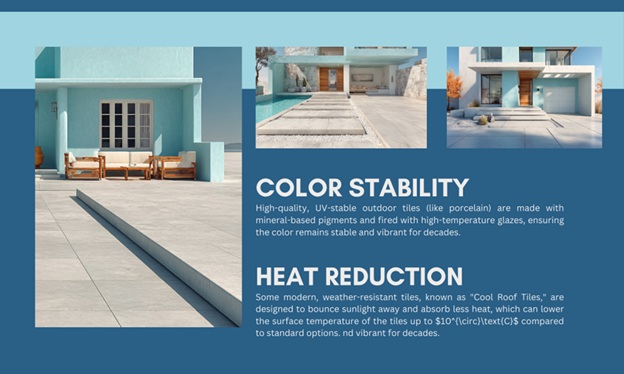
Beyond structural durability, a luxury patio must retain its original visual language year after year. Sun exposure, moisture, and seasonal temperature shifts can dramatically alter the appearance of inferior outdoor tiles, leading to fading, surface chalking, or uneven discoloration that undermines the entire design.
This is where material sourcing and production discipline matter. Well-made porcelain tiles with through-body pigmentation and UV-stable finishes are far more likely to maintain tonal consistency over time.
In curated collections such as patio and terrace OUERclè tiles the emphasis is placed on controlled firing, consistent surface texture, and color systems engineered for outdoor exposure rather than decorative effect alone. The result is a surface that ages quietly and gracefully instead of visibly deteriorating.
Through-body construction ensures that minor wear, surface abrasion, or edge exposure does not reveal a contrasting interior color. This is especially important in high-use outdoor areas where furniture movement, foot traffic, and seasonal cleaning are unavoidable. When the tile’s performance is aligned with its aesthetic intent, the patio retains its architectural integrity for decades rather than seasons.
Moisture management beyond tile selection
Freeze-thaw resistance does not depend solely on the tile itself. The entire patio system must manage water effectively.
Standing water increases the risk of moisture infiltration and freeze damage. Patios should slope away from structures at approximately one-quarter inch per foot to encourage drainage.
Substrate preparation is equally critical. Concrete slabs must be properly cured, reinforced, and free from cracks. Elevated pedestal systems offer excellent moisture control by allowing water to drain beneath the tile surface.
Waterproof membranes provide an additional layer of protection, preventing moisture from reaching the substrate and reducing the risk of long-term structural damage.
Grout selection and protection
Grout often fails before tile, especially in outdoor conditions. Standard cement-based grout absorbs water easily and deteriorates quickly in freeze-thaw environments.
Epoxy grout offers superior performance. It is non-porous, UV-stable, and resistant to cracking, staining, and moisture penetration. While more expensive, it significantly extends the lifespan of an outdoor tile installation.
 AI-Generated
For cement-based grout, sealing is mandatory. High-quality penetrating sealers reduce water absorption while allowing vapor transmission. Resealing should be scheduled every one to three years depending on exposure.
Outdoor grout best practices:
• Choose epoxy grout where possible
• Seal cement grout consistently
• Maintain appropriate joint width for movement
• Inspect joints annually for deterioration
Regional considerations for tile selection
Climate dictates performance priorities.
Northern regions require maximum freeze-thaw resistance and low water absorption. Southern climates prioritize UV stability and heat resistance. Coastal areas demand resistance to salt air and humidity. Mountain regions require excellence across all performance categories due to high UV exposure and severe freeze-thaw cycling.
Understanding your regional conditions ensures material choices align with real environmental demands, not just aesthetic preference.
Installation techniques for enhanced durability
Even the most advanced tile can fail if installed incorrectly. Outdoor installations require polymer-modified thin-set mortars rated for exterior use, flexible membranes, and properly spaced expansion joints.
Substrate movement, improper curing, or insufficient drainage will compromise even premium materials. Skilled installation is as critical as tile selection.
Maintenance strategies for long-term performance
Proper maintenance ensures performance materials deliver their full lifespan.
• Clean regularly to prevent moisture retention
• Reseal grout and stone as recommended
• Ensure drainage paths remain clear
• Use protective pads under furniture and planters
These simple steps dramatically extend the life and appearance of outdoor tile installations.
Cost-benefit analysis of premium tiles
While freeze-thaw and UV-resistant tiles carry a higher upfront cost, lifecycle value strongly favors premium materials. Replacement costs for failed patios often exceed original installation costs by several multiples.
Premium tiles reduce maintenance, avoid premature failure, enhance resale value, and preserve the enjoyment of outdoor spaces without ongoing frustration.
Future-proofing against climate change
Weather patterns are becoming more unpredictable. Regions once considered low-risk now experience temperature volatility, heavier precipitation, and increased UV intensity.
Selecting tiles engineered for extreme conditions provides insurance against evolving climate realities. Materials chosen today must perform under tomorrow’s weather, not yesterday’s averages.
Final thoughts
A luxury patio deserves materials designed for real-world exposure. Freeze-thaw and UV-resistant tiles protect both structure and beauty across seasons, climates, and decades of use.
By prioritizing proven performance ratings, thoughtful installation, and long-term durability, you ensure your outdoor space remains as refined and functional years from now as it is on day one.
From blazing summer sun to the harshest winter frost, the right tile selection transforms your patio into a resilient, enduring extension of luxury living.